Start improving with Life QI today
Full access to all Life QI features and a support team excited to help you. Quality improvement has never been easier.
Organisation already using Life QI?
Sign-up

Published on 28 August 2026 at 11:45
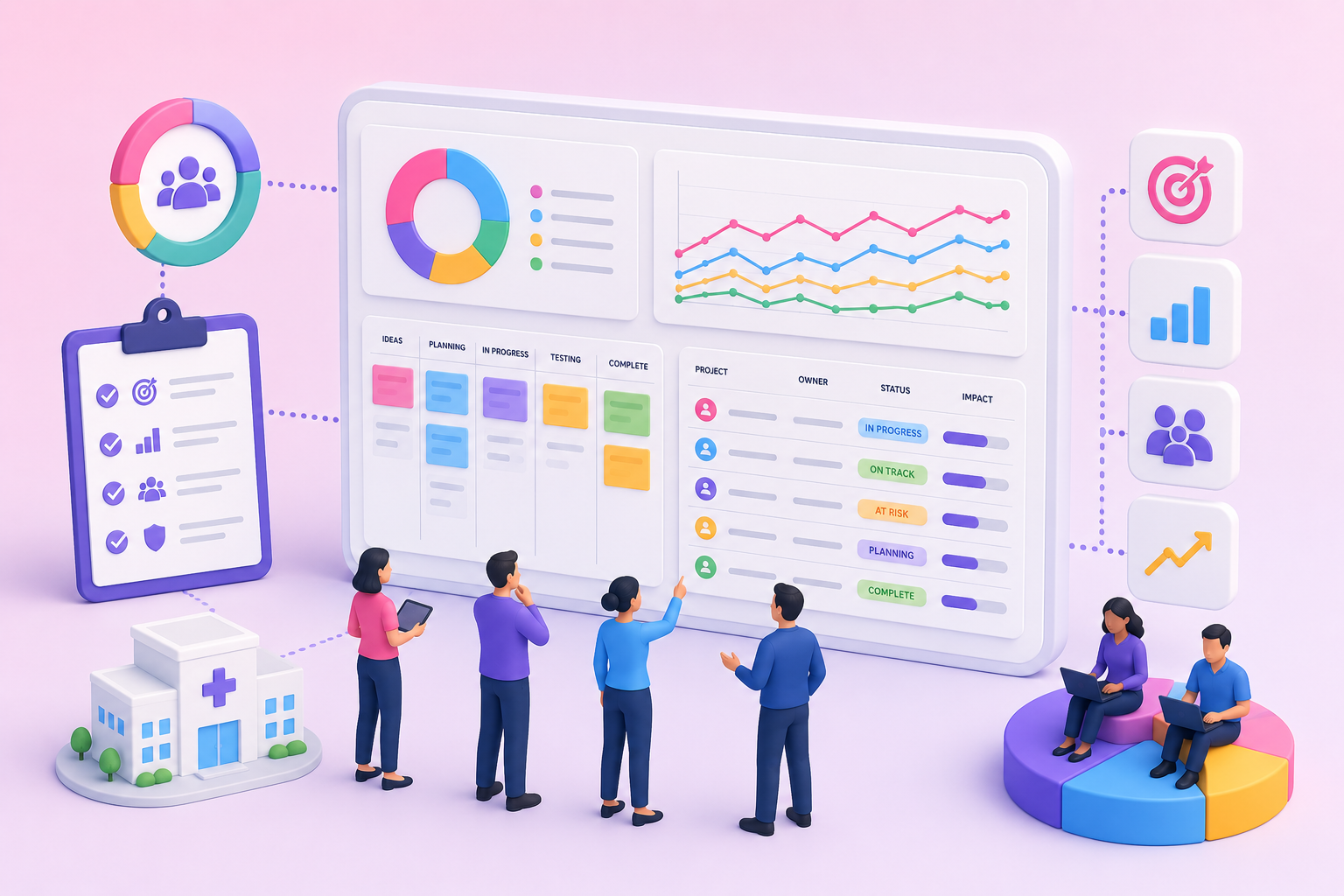
Healthcare organisations rarely have just one improvement project underway at a time.
Across a hospital or health system, teams may be reducing falls, improving discharge processes, tackling waiting times, redesigning pathways, improving staff experience and testing new approaches to patient safety, all at once.
Individually, many of these projects may be well managed. At organisational level, however, leaders can still struggle to answer some surprisingly basic questions.
How many improvement projects are currently active? Which are making progress? Which have stalled? Which strategic priorities are they supporting? Where are teams duplicating effort? What impact is all of this activity actually delivering?
This is the point where improvement stops being purely a project management challenge and becomes a portfolio management challenge.
Managing improvement at portfolio level means being able to understand individual projects in the context of the organisation as a whole. It requires visibility, consistency, prioritisation and enough structure to identify where support is needed, where duplication exists and where successful learning could spread.
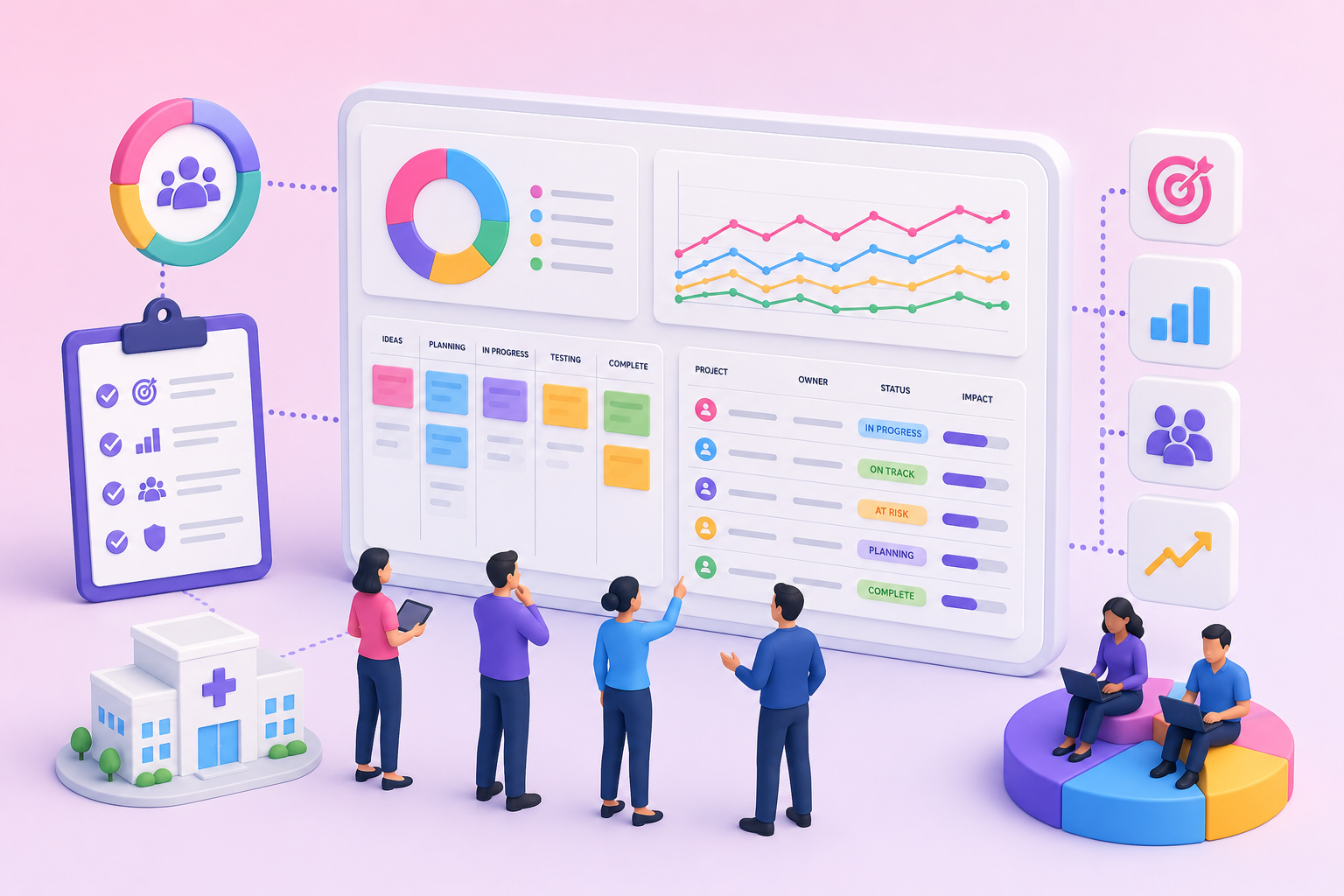
Platforms such as Life QI can help by bringing improvement projects into one shared environment, giving organisations a more consistent view of activity, progress and outcomes across their portfolio.
A quality improvement portfolio is more than a list of projects.
A simple project register may tell you what work exists, but a managed improvement portfolio should help leaders understand how that work connects to organisational priorities, where progress is being made, where risks are emerging and what impact projects are delivering collectively.
A useful portfolio view should connect information such as project ownership, strategic alignment, status, milestones, measures, outcomes, risks and learning. The aim is not simply to catalogue improvement activity. It is to understand how that activity contributes to the wider goals of the organisation.
This distinction matters because a healthcare organisation can have a very large number of active projects without necessarily having a healthy improvement portfolio.
A strong portfolio is not defined by how many projects it contains. It is defined by how well those projects are selected, supported, connected and governed.
Life QI can help organisations create this more structured view by bringing improvement work together in one shared environment rather than relying on disconnected spreadsheets, local trackers and separate reporting processes.
Improvement work is naturally distributed across healthcare organisations. Projects may be led by clinical teams, operational managers, improvement advisors, programme leads or patient safety teams, all working across different departments and services. That creates a number of practical challenges.
Information is often fragmented across emails, PowerPoint presentations, spreadsheets, shared drives, Teams channels and local databases. Even when each team is documenting its work, creating an organisation-wide view can require a substantial amount of manual effort.
Different teams may also use different language and approaches to describe progress. One team may describe a project as "on track", while another uses a percentage completion score and another reports through a red, amber or green status. Comparing projects quickly becomes difficult when there is no shared structure.
Improvement portfolios are also constantly changing. New projects begin, others finish, priorities shift, staff move and some projects lose momentum. A report compiled once a quarter can quickly become out of date.
This is where maintaining portfolio information in the same place that project teams are doing their improvement work can make a significant difference. Rather than creating a separate reporting layer, platforms such as Life QI can help organisations build a portfolio view from the project information teams are already maintaining.
The portfolio then becomes a reflection of live improvement activity rather than a separate administrative exercise.
Before an organisation can manage its improvement portfolio, it first needs to see it. That sounds simple, but visibility is often one of the biggest challenges.
Leaders should be able to understand how many projects are active, where they are taking place, who owns them, what problems they are trying to solve and what stage they have reached. Without that basic visibility, it is difficult to prioritise support, identify duplication or understand where improvement capacity is being used.
Visibility does not mean that every project needs to be centrally controlled. The purpose is not to create another layer of bureaucracy. The purpose is to create enough shared awareness that teams and leaders can make better decisions.
A shared platform such as Life QI can help by giving improvement teams an organisation-wide view of project activity. Instead of relying on manually maintained registers or repeated requests for updates, organisations can see what work is underway across departments and services in one place.
This kind of visibility also helps reduce duplicated effort. If teams can easily discover that another department is already tackling a similar problem, they can learn from that work rather than beginning from scratch.
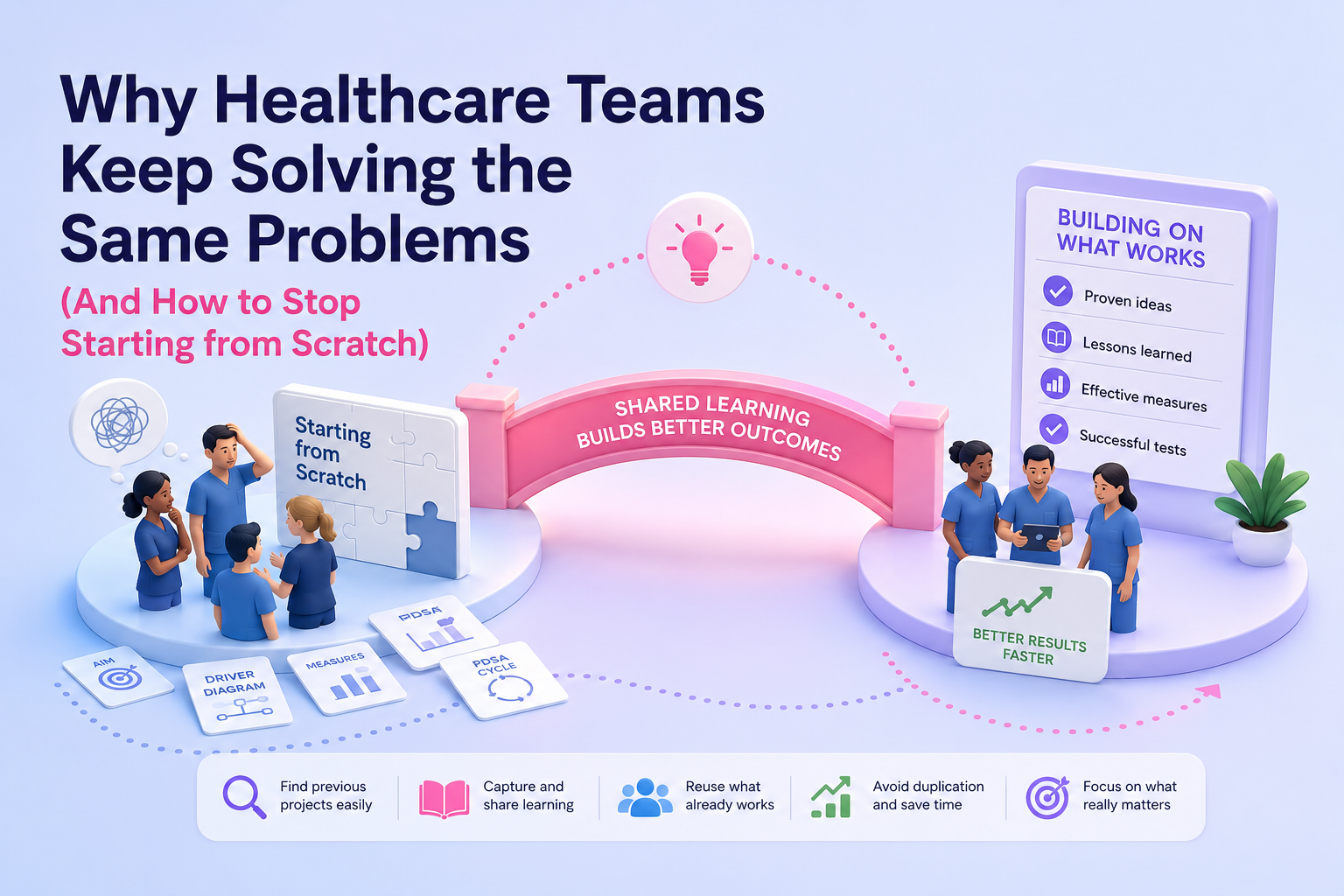
Related article: Why Healthcare Teams Keep Solving the Same Problems (And How to Stop Starting from Scratch)
One of the biggest risks in any improvement portfolio is activity without alignment.
A healthcare organisation may have a large amount of improvement work underway while still making limited progress against its most important strategic priorities. That is why every project should have a clear answer to a simple question: Why are we doing this?
The answer should connect the project to an organisational priority, patient safety objective, service goal, regulatory requirement or other clearly defined need.
At portfolio level, leaders should also be able to step back and look for patterns. Are too many projects concentrated around one area while another strategic priority receives very little attention? Are teams working on issues that are locally important but poorly connected to wider organisational goals? Are there projects that made sense when they started but are no longer a priority?
The goal is not simply to have more improvement projects. It is to direct improvement capacity towards the work that matters most.
Life QI can support this by helping organisations structure, categorise and group projects around strategic programmes, themes or priorities. That makes it easier to see not just how much improvement activity exists, but where that activity is being directed.
Related article: How to Prioritise Healthcare Improvement Projects for Maximum Impact.
It can be tempting to treat the number of active projects as a sign of improvement maturity.
"We have 150 QI projects underway" may sound impressive. But on its own, that number tells us almost nothing.
A large portfolio could indicate strong engagement and widespread participation in improvement. It could also indicate weak prioritisation, overloaded teams, duplicated effort and a high number of projects that have started but are not making meaningful progress.
Better questions include:
A healthy improvement portfolio is not necessarily a large portfolio. It is a portfolio in which projects are progressing, generating learning and contributing to meaningful outcomes.
This is where a structured improvement platform can provide far more useful insight than a simple project count. Life QI can help organisations understand progress, measurement activity, status and outcomes across projects, making it easier to distinguish genuine improvement activity from projects that are simply still marked as active.
Many improvement projects do not formally fail. They simply stop moving. A team becomes busy with operational pressures. A project lead changes role. Data collection becomes difficult. Sponsorship fades. Meetings are postponed and gradually stop happening. The project remains "active", but meaningful activity has ceased.
Portfolio management should help organisations spot this early.
Warning signs might include:
The value of identifying these signals is not to police teams. It is to intervene while the project can still be recovered. An improvement advisor or sponsor can ask whether the aim needs narrowing, whether the team needs methodological support, whether data collection is too difficult or whether the project has simply become a lower priority.
Sometimes the right decision will be to re-energise the work. Sometimes it will be to pause or close it. Both are better than allowing projects to remain indefinitely in a state of inactivity.
Because project activity in Life QI is visible within the wider organisational portfolio, improvement teams can use that visibility to identify inactive or struggling projects more quickly and target support where it is needed.
Related article: Why Quality Improvement Projects Fail in Hospitals (And How to Prevent It)
Project status alone does not tell you whether improvement is happening. A project can be reported as "green" while its outcome measures show little or no change.
At individual project level, teams need meaningful measures that help them understand whether their changes are making a difference. At portfolio level, leaders need enough visibility to understand which projects are collecting data, where outcomes are improving and where evidence of impact is still missing.
This does not mean forcing every project into a single organisation-wide metric. Improvement work is often too varied and context dependent for that. The aim should be to understand where measurable progress is occurring and where the evidence is weak.
Leaders may want to know which projects have defined outcome measures, which are actively collecting data, which show evidence of improvement and which have completed without demonstrating a measurable change.
Bringing project management and measurement together is particularly valuable here. When project information sits in one system and measurement data sits in another, the portfolio view quickly becomes disconnected from the actual evidence of improvement.
Life QI helps avoid this separation by keeping improvement projects and their measurement activity within the same environment.
Related article: Why Measurement Feels Hard in Healthcare Improvement and How to Simplify It
Portfolio management becomes much easier when projects follow a common structure.
That does not mean every improvement project needs to use exactly the same methodology or contain exactly the same information. A falls reduction project may look very different from a workforce improvement project, a patient flow redesign or a strategic transformation programme. However, there are some pieces of information that organisations will usually want to capture consistently.
These might include:
Capturing this information consistently makes it easier to compare projects, identify patterns and build a meaningful portfolio view.
The important principle is to standardise the information needed for oversight without forcing every team to improve in exactly the same way.
Life QI supports this balance through a structured project template. Organisations can create consistency in the information captured across improvement work while still allowing teams to use different tools where appropriate. That helps create stronger governance without removing local flexibility.
Once improvement work is visible and structured, portfolio management can become much more than monitoring.
Leaders can begin to ask more useful questions.
Which services have the most active improvement work? Which strategic priorities attract the greatest attention? Where are projects repeatedly stalling? Are multiple teams trying to solve the same problem? Which approaches are producing the strongest outcomes? Where is successful work ready to spread?
This is where a portfolio starts to become a source of organisational learning.
Instead of evaluating each project in isolation, leaders can begin to see themes across the system.
A shared improvement platform makes this easier because projects are no longer hidden in separate files and local systems. Life QI can help organisations build a more connected view of improvement activity, making patterns, overlaps and opportunities for shared learning easier to identify.
This matters because every project should ideally make the next project easier. If one team has already developed a useful measure, tested a successful intervention or discovered an important barrier, that learning should not remain isolated.
Related article: Why Healthcare Teams Keep Solving the Same Problems (And How to Stop Starting from Scratch)
Poor portfolio management can easily become a reporting exercise.
Teams are asked for monthly updates. Status reports are collected. RAG ratings are reviewed. Dashboards are produced. But nothing changes. Good portfolio management should help teams make progress.
The purpose of oversight is not simply to know which projects are red, amber or green. It is to understand where support is needed and act on that information. That support might include improvement coaching, stronger sponsorship, access to data, additional resource, help with measurement or connecting two teams working on similar problems.
A good portfolio process should therefore create a feedback loop between visibility and support.
Life QI can help here by giving improvement advisors and leaders a more direct view of project activity without relying exclusively on formal reporting cycles. That makes it easier to provide targeted support when teams need it, rather than waiting for the next scheduled review.
At some point, senior leaders will ask a very reasonable question: What difference is all of this improvement work making?
Portfolio management should help organisations answer that question with more than a list of active projects. A mature portfolio view should help build a credible picture of the outcomes being delivered across improvement work. That might include patient outcomes, safety improvements, operational changes, workforce benefits, learning generated and successful approaches that have spread to other teams.
Not every improvement project can or should be converted into a financial return on investment figure.
Healthcare improvement creates value in many different ways. The objective should be to create a clear evidence base that demonstrates the collective impact of improvement activity across the organisation.
Because Life QI brings project outcomes, measures and learning together within the same improvement environment, it can help organisations retain that evidence over time and build a stronger picture of portfolio impact. This also creates a useful foundation for communicating the value of improvement to boards, executives and external stakeholders.
A strong improvement portfolio should give leaders confidence that they can answer a relatively simple set of questions.
If answering those questions requires chasing project leads, combining multiple spreadsheets and manually preparing PowerPoint reports, the organisation probably does not yet have a true portfolio view.
The objective should be to make improvement activity visible enough that leaders can spend less time assembling information and more time using it.
Healthcare organisations do not need more project administration. They need better visibility, clearer priorities, stronger support and more effective organisational learning.
Managing improvement as a portfolio helps organisations move beyond simply running lots of individual projects. It creates a connected view of where improvement is happening, how it supports organisational goals, where teams need help and what impact is being achieved.
The strongest improvement organisations do not simply manage projects well. They manage improvement as a system.
Life QI was designed to support this organisation-wide approach. By bringing projects, teams, measures, improvement tools and learning together in one shared platform, it helps healthcare organisations move beyond simply tracking projects and towards managing improvement as a connected portfolio.
Full access to all Life QI features and a support team excited to help you. Quality improvement has never been easier.
Organisation already using Life QI?
Sign-up